The Art of Decanting

by Eric Hwang on August 30, 2010

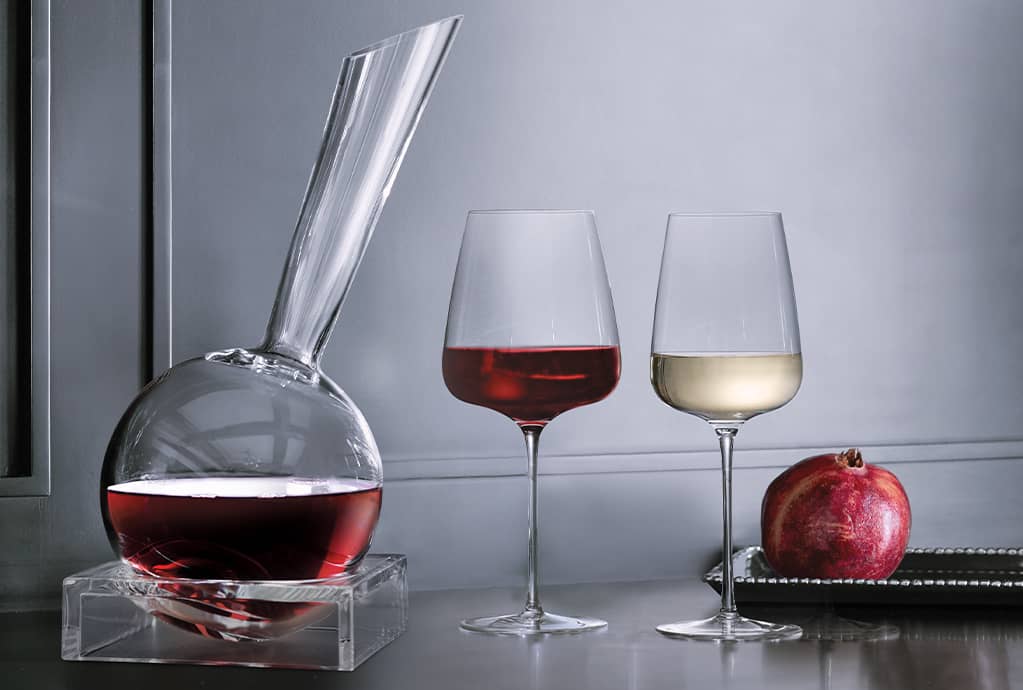
iwa-riedel-amadeo-lyra-wine-decanter-mainLgMost experts agree that decanting a wine depends largely on the wine’s age and varietal characteristics. Most young wines, especially big, bold reds such as Cabernet Sauvignon, Barolo or Syrah benefit from decanting. Not because it helps to soften tannins, but rather by dissipating undesirable sulfer-based compounds it allows the fruit characteristics to concentrate and intensify giving more focused aromas and a smoother mouthfeel, making tannins appear softer. To work effectively, the decanter needs to have lots of surface area such as the Riedel Ultra Decanter or the Riedel Duck Decanter, which combines practicality with aesthetics. In case you’re concerned about leaded glass, try The Ultimate Decanter by Nachtmann or the Eisch Dripless Captain’s Decanter as lead-free alternatives.

In effect, decanting isn’t adding anything to the wine. Instead, it’s subtracting undesirable compounds through dissipation and evaporation. However, allowing the wine to sit too long in a decanter can have a detrimental effect. Decanting any wine too far in advance of serving could rob the wine of the very fruit aromas that you are trying to enhance. With a younger wine, you could be left with an overly-oaky and harsh taste as the fruit characteristics oxidize. With older wines, you could end up with something stale, flat and lacking in richness. So what’s the best way to decant and still hit this elusive sweet-spot?

“Decanting benefits younger red wines and even if the effect is minimal, it’s still elegant and enhances the overall experience.”
—Marco DiGiulio, Winemaker

Allow your wine to settle in an upright position for at least one day for younger wines and preferably as long as four days for wines older than 15 years. This gives the fine particles of sediment time to settle to the bottom of the bottle if you’ve been storing it horizontally.

Plan to open your wine about 90 minutes prior to when you anticipate drinking it. Carefully remove the foil entirely and wipe off the neck of the bottle. Remove the cork without disturbing the wine too much. Start off by trying some of the wine straight out of the bottle. If the aromas are intense and flavors are full and rich, the only reason to decant would be to remove any sediment, so you could wait to decant immediately before serving. Go ahead and stick the cork back in it and wait until you’re ready to serve it. The amount of air exposure from opening the bottle is negligible. If on the other hand the wine seems tight, lacking in aromas and fruit character, or has some slight sulfur odors, you should decant well in advance of drinking.

The traditional proper way to decant wine was using a candle under the neck of the bottle to see when sediment starts to pour out. That’s just too tricky and messy. The new proper way to decant wine is using a bright flashlight. Shine the beam through the neck of the bottle as you gently and slowly pour from the bottle into the decanter. Stop when you begin to see particles or cloudiness. You should have less than an ounce or two left with sediment which is discarded. An easier method uses a funnel with a very fine screen to filter out all but the smallest sediment particles which will most likely remain in the decanter. The sediment in wine occurs naturally as wine ages and molecules of color and tannins precipitate from the wine. This sediment is harmless but gives wine an undesirable cloudy appearance and could add unpleasant bitter flavors and grittiness.

What about white wines? Most white wines won’t have any sediment unless they haven’t been cold-stabilized, in which case, you may get small tartrate crystals. Some white wines will benefit from decanting, allowing more of the fruit and mineral characteristics to shine through as sulfur compounds and fermentation aromas evaporate. But many people like to decant a white wine simply because it makes for better presentation. In this case, a decanter such as the Riedel Amadeo Lyra Decanter makes for an impressive way to serve your white wines. A more cost-conscious yet elegant option is the Riedel Cornetto Sommelier Decanter.

So whether its to filter out sediment or to open up a young wine, or simply to serve your wine with elegance, there’s an art to decanting and IWA has a great selection of decanters to help you decant in style.

Bookmark and Share

{ 0 comments }

Laguiole: The French Knife with a Bee

by Eric Hwang on August 11, 2010

A Farmer’s Tool

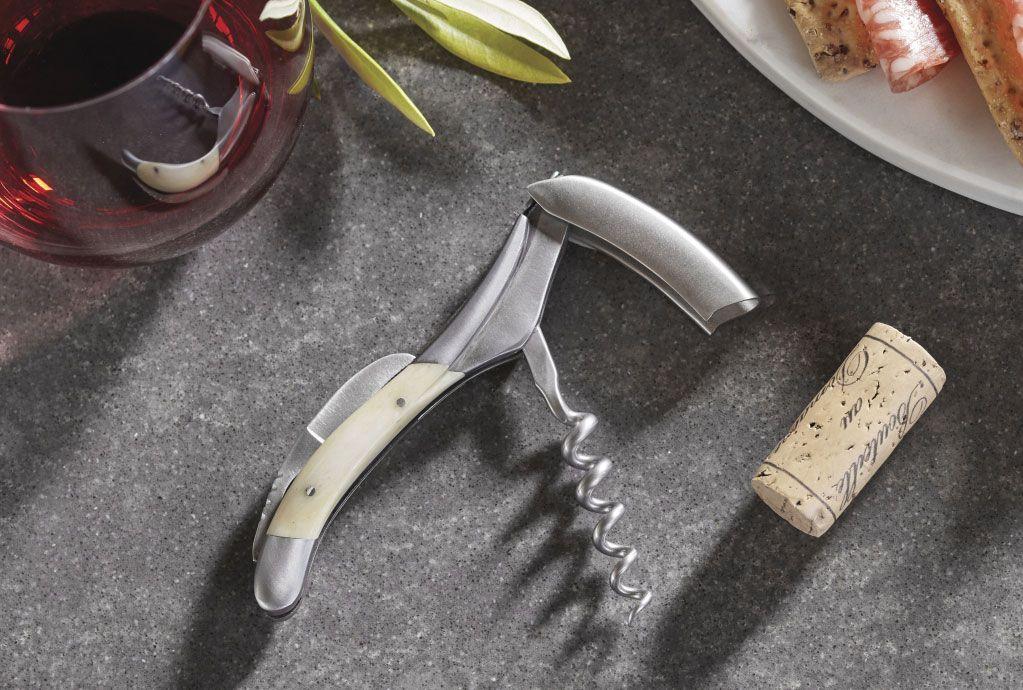
What once started as a simple farmer’s knife is now one of the most sought-after urban tools—and status symbol—to ever come out of France. The name Laguiole (pronounced, lah-yole), comes from a village in the middle of the Aveyron region of France, where the original knives were first made in 1829 by Jean-Pierre Calmels. It was a popular knife for farmers since it was adapted to their particular needs. Originally used to cut bread and wood, later, a poinçon or piercer was added that they could use to make holes in harnesses or to pierce the stomach of bloated animals suffering from colic. [I know, TMI, but hey, I'm not making this stuff up.] As needs changed, so did the knife. In 1880, as poor farmers emigrated to nearby Paris to open restaurants and bars, a corkscrew was added to the knife.

Signature Bee

Many legends exist regarding the insect forged on the spring. Many believe it is a fly or horsefly that was commonly seen in the Aveyron region because of the cattle bred in the region. In fact, the catch on a Laguiole knife is often referred to as la mouche (the fly) in French. However, the locals prefer another, more glamorous story suggesting that the insect is a bee, an imperial symbol, bestowed by Napoleon himself to the town of Laguiole in thanks for the bravery of its soldiers. [Now that's a French story that IS made up.]

Popularity Brings Change

Over the years, as demand grew, production increased and the manufacture of the knives gradually moved 100 miles northwest to the town of Thiers. By 1981, these famous knives were all produced in Thiers. In 1988, the town of Laguiole built two forges to once again produce its namesake products, but most authentic Laguiole products are still produced in Thiers. While the design of the Laguiole knife is over 170 years old, the design of the coveted Laguiole corkscrews made today is actually only 20 years old. Today the Laguiole name and signature bee on the spring is on folding knives, corkscrews, table cutlery and even cigar cutters.

Cheap Knock-Offs

There is a lot of confusion about the Laguiole name and the signature bee. Laguiole is not a single company that produces these knives and corkscrews. Aside from being the name of the village in Aveyron and the name of a semi-hard cheese, Laguiole is really just a generic name of a folding knife. Because the name Laguiole and the bee on the spring were never trademarked, many inexpensive, low-quality knock-offs have flooded the market. Just because there’s a bee on the spring or bolster, doesn’t mean it’s made in France. Many of these low quality machine-made knives and corkscrews are made in China or Pakistan. And even in France, there are different levels of quality, from inexpensive mostly machine-made items to high-end, fully hand-made and engraved products, with a high price tag to match.

The Laguiole corkscrews and cutlery offered by IWA strike a nice balance between high-quality and affordability. Proudly made in Thiers, France by the craftsmen at the Jean Dubost Company, our Laguiole products are beautiful, functional and durable. Holding one in your hand is like like holding a piece of French history. Not only should you get one for yourself, they make excellent gifts for the wine aficionados in your life too.

Here’s an interesting video showing the process of hand-assembling a sommelier’s corkscrew.

Bookmark and Share

{ 0 comments }

Great things come in small packages

July 30, 2010

Not everyone is lucky enough to live in or close to California wine country. But that doesn’t mean you can’t sample wines without spending a fortune. With our mini tasting kits, you can taste all of the best wines we have to offer without having to buy, and open, an entire 750mL bottle of wine [...]

Read the full article →

Vinturi Aerator Blind Tasting

July 23, 2010

Yesterday, we visited our friends at Trione Vineyards & Winery to put the Vinturi Wine Aerator to the test on video. We asked the question: could our tasters tell the difference between the wine poured straight out of the bottle to the same wine poured through a Vinturi? Both our tasters, novice and expert, preferred [...]

Read the full article →

Chill out…with our cooling units

July 18, 2010

It’s summer and just about anywhere you go now, it’s HOT! And if it’s hot for you, it’s even worse for your wine. My previous article on Wine Storage said that temperature is the single most important factor in storing your wine. These soaring temperatures are a good reminder for you to get that wine cellar [...]

Read the full article →

We’re Picky About Our Barrels

July 8, 2010

We’re picky about our barrels…and it shows in the quality of Vintage Wine Estate’s wine.
Oak barrels are vital components in the making of our wines. Not only does the oak affect the aroma, flavor, color and texture of a wine during its fermentation and aging process, it also helps to concentrate the flavors and aromas [...]

Read the full article →

IWA at the Healdsburg Tasting Room

July 2, 2010

Did you know that Vintage Wine Estates—that includes IWA—has a tasting room in Healdsburg, California. It’s warm, bright, comfortable and best of all, right on the square in downtown Healdsburg. Oh wait, on second thought, the best thing is the wine. We’re pouring the Windsor Vineyards Champagne, along with some of our sister wineries including, Sonoma [...]

Read the full article →

FAQ: Wine Storage

June 23, 2010

We get a lot of questions from our customers about wine storage, and while we’re always happy to answer all your wine storage questions, some questions fall into that FAQ (frequently asked question) category and deserved to have their own blog post. Here are some FAQ’s that our sales consultants often hear:
Q: What are the [...]

Read the full article →

Have Wine, Will Travel

June 18, 2010

Those bottles of wine you’re bringing to the restaurant deserve a better way to travel than inside a paper bag or some neoprene tote. You know who you are and what I’m talking about. And what about those times when you’re bringing more than just a couple of bottles? You’re not going to pack them [...]

Read the full article →

What Dad Really Wants

June 11, 2010

Father’s Day is just around the corner. You did remember didn’t you?…DOH!  Well, you still have time to get him something—no, not another funky Jerry Garcia tie or bottle of Old Spice cologne. If dear old Dad is a wine lover, get him something he really wants. A gift from IWA shows Dad just how [...]

Read the full article →